← Back to Portfolio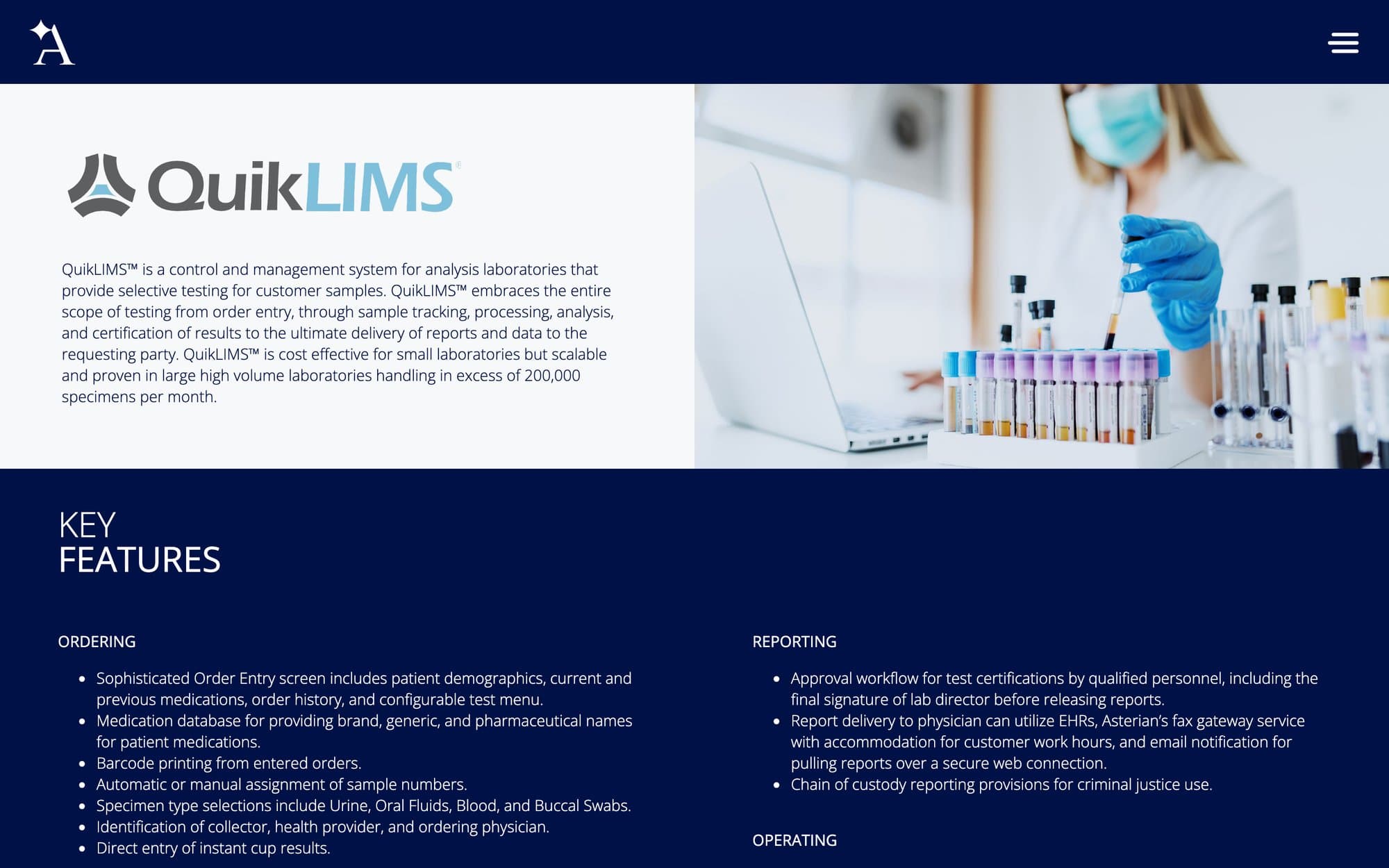
QuikLIMS (Asterian)
team projectLaboratory Information Management System (LIMS) for clinical and forensic laboratories. Handled the full lifecycle of testing — from order entry through sample tracking, analysis, result verification, and report delivery. Now marketed as Asterian.
Tech Stack
JavaJBossNode.jsAngularJSJavaScriptLinuxHibernateHTML/CSS
Timeline
~9 years (approximately 2008–2017)
Problem
Clinical and forensic laboratories need software that handles hundreds of thousands of specimens per month — from the moment a sample arrives through testing, verification, and delivery of results to physicians. The system must enforce strict regulatory workflows, integrate directly with laboratory instruments, and maintain chain of custody for forensic cases. Any error can affect patient care.
My Role
Core developer and systems engineer across a ~9 year tenure, wearing many hats as the product and team evolved. Implemented toxicology algorithms that automated the verification of patient samples. Built instrument interfaces in Java (and later Node.js) connecting the LIMS directly to laboratory hardware. Designed data visualization systems for laboratory managers to validate their systems. Built lab result delivery systems. Served as direct point of contact for customer labs, troubleshooting production issues on-site and remotely. Performed Linux server administration on both company and customer infrastructure. Addressed performance issues with Hibernate. Contributed to the migration from a Java Enterprise application toward a more JavaScript-based architecture (Node.js and AngularJS). Improved authentication and streamlined data entry workflows.
Constraints
Regulated industry with FDA and CLIA compliance requirements. Needed to integrate with dozens of different laboratory instruments via custom interfaces. Supported laboratories ranging from 3-person clinics to 50+ user high-volume operations. On-site deployments on customer-managed servers of varying capabilities. Zero tolerance for data loss or incorrect results.
Architecture Decisions
Started as a Java Enterprise application on JBoss with Hibernate ORM. Over time the team migrated toward a more JavaScript-centric architecture using Node.js on the backend and AngularJS on the frontend. Custom instrument interfaces spoke vendor-specific protocols to connect the LIMS to laboratory analyzers for automated data capture. Linux-based deployment on both company-hosted servers and on-site customer hardware.